
الإشعارات
نشرت من supriya maximize
مصنفة في التكنولوجيا 255 مشاهد
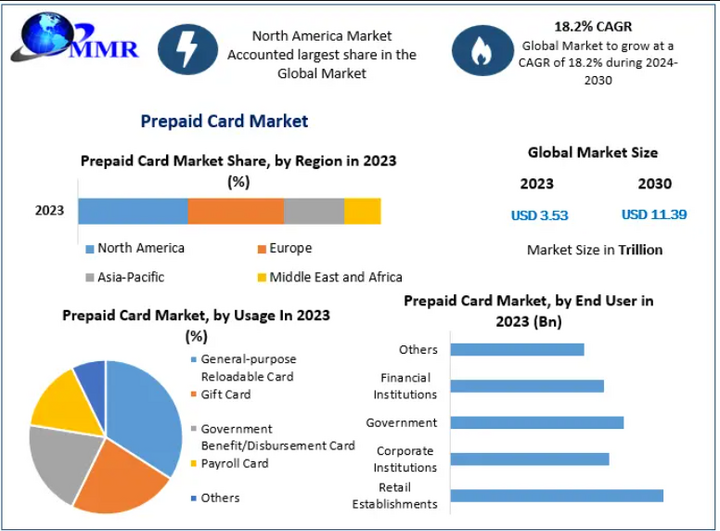
The Global Prepaid Card Market, valued at USD 3.53 trillion in 2023, is witnessing rapid expansion driven by digital adoption, fintech innovation, and rising demand for cashless payment instruments. The market is projected to grow at a CAGR of 18.2% from 2024 to 2030, reaching an impressive USD 11.39 trillion by the end of the forecast period.
Prepaid cards—often referred to as stored-value cards or prepaid debit cards—have transformed the payments landscape by offering a secure and convenient alternative to cash. These cards can be loaded effortlessly through various channels, including bank transfers, online deposits, mobile apps, or in-person cash loading points.
The shift toward digital-first financial ecosystems, rising corporate interest in cash alternatives, and growing preference for budget-friendly payment instruments are major factors accelerating market demand. Prepaid cards allow consumers and businesses to enjoy the benefits of electronic payments without linking transactions to traditional bank accounts or credit facilities.
Find out where the real opportunities lie! Get your free report sample today by clicking here:https://www.maximizemarketresearch.com/request-sample/110670/
Banks and financial institutions are actively embracing prepaid cards as part of their digital banking portfolio. These cards are now widely accepted across ATMs, POS terminals, and online platforms.
Key growth drivers include:
Rise in digital banking and online payments
Decline in traditional instruments like cheques and demand drafts
Lower risks associated with prepaid transactions
Growing corporate adoption for reimbursements and spending management
This digital shift is expected to significantly contribute to the scale and expansion of the prepaid card ecosystem.
With more individuals working abroad and sending money home, prepaid cards have become a cost-effective and secure remittance channel. They offer:
Lower transaction fees
Faster access to funds
Reduced reliance on traditional remittance systems
Attractive currency exchange options
Enhanced security for cross-border transfers
The rise in global migration and digital remittances is directly fueling prepaid card market growth.
The explosive growth of the e-commerce industry continues to push consumers toward digital payment tools. Prepaid cards are increasingly used for:
Online shopping
Travel bookings
Gifting
Subscription payments
These cards offer an additional layer of privacy during online transactions and are often preferred by individuals who seek secure, non-bank-linked payment options.
Despite strong growth, the market faces key restraints:
Lack of standard regulations across countries
Rising concerns regarding data privacy
Risks of unauthorized transactions
Potential misuse for anonymous activities
Fraudulent payment activities and inconsistent global standards may affect user trust; however, ongoing improvements in fintech security solutions are expected to mitigate these issues.
Closed-Loop Cards (Dominant in 2023)
Used within specific networks such as retail stores, metros, or universities
Popular among travelers and students
Rising adoption is strengthening segment growth
Open-Loop Cards (Rapid Growth)
Function like standard debit/credit cards
Enable ATM withdrawals, online transactions, and global purchases
Lower risk of fraud and higher convenience fueling demand
Gift Cards (Largest Segment)
Widely used for retail purchases and online shopping.
Payroll Cards
Adoption rising among employers for salaries, bonuses, and reimbursements.
Government Disbursement Cards
Used for benefits distribution and financial inclusion initiatives.
General-Purpose Reloadable Cards
Common among unbanked and underbanked customers.
North America dominated the market in 2023 due to:
Widespread adoption of prepaid cards
Strong regulatory support
High fintech penetration
Large unbanked population segment
Extensive digital banking infrastructure
The United States remains the single largest contributor, accounting for over half of the global prepaid card market.
APAC is anticipated to record the highest CAGR during 2024–2030 driven by:
Massive adoption in retail and e-commerce
Expanding digital payment acceptance
Government-backed financial inclusion initiatives
Rising smartphone penetration
Countries like India, China, Indonesia, and Vietnam are emerging as high-potential markets.
Find out where the real opportunities lie! Get your free report sample today by clicking here:https://www.maximizemarketresearch.com/request-sample/110670/
The prepaid card market is highly competitive and includes global financial giants and emerging fintech innovators. Key players include:
Visa Inc.
MasterCard Inc.
American Express
PayPal Holdings
Citigroup
JPMorgan Chase & Co.
Green Dot Corporation
NetSpend Holdings
BBVA Compass Bancshares
H&R Block
Total System Services
Kaiku Finance
UniRush LLC
Mango Financial
Companies are focusing on partnerships, digital card solutions, mobile wallet integration, and enhanced security systems to strengthen market presence.
The Global Prepaid Card Market is on a strong upward trajectory, powered by digital transformation, growing e-commerce, rising remittances, and the push toward cashless economies. While security and regulatory challenges persist, technological advancements and government support are expected to ensure robust market expansion through 2030.